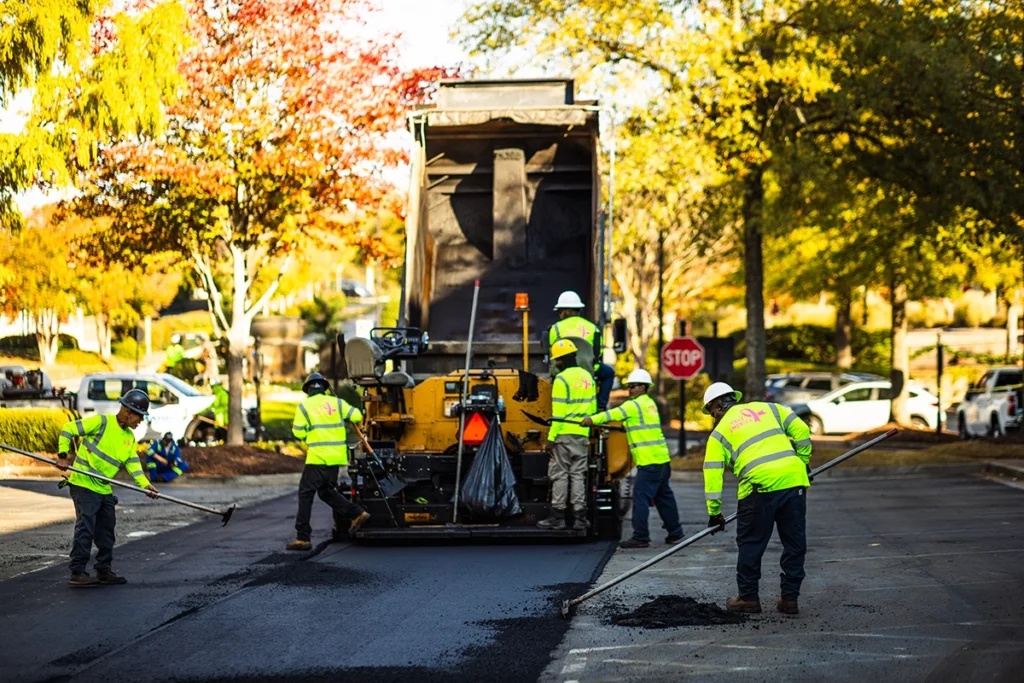
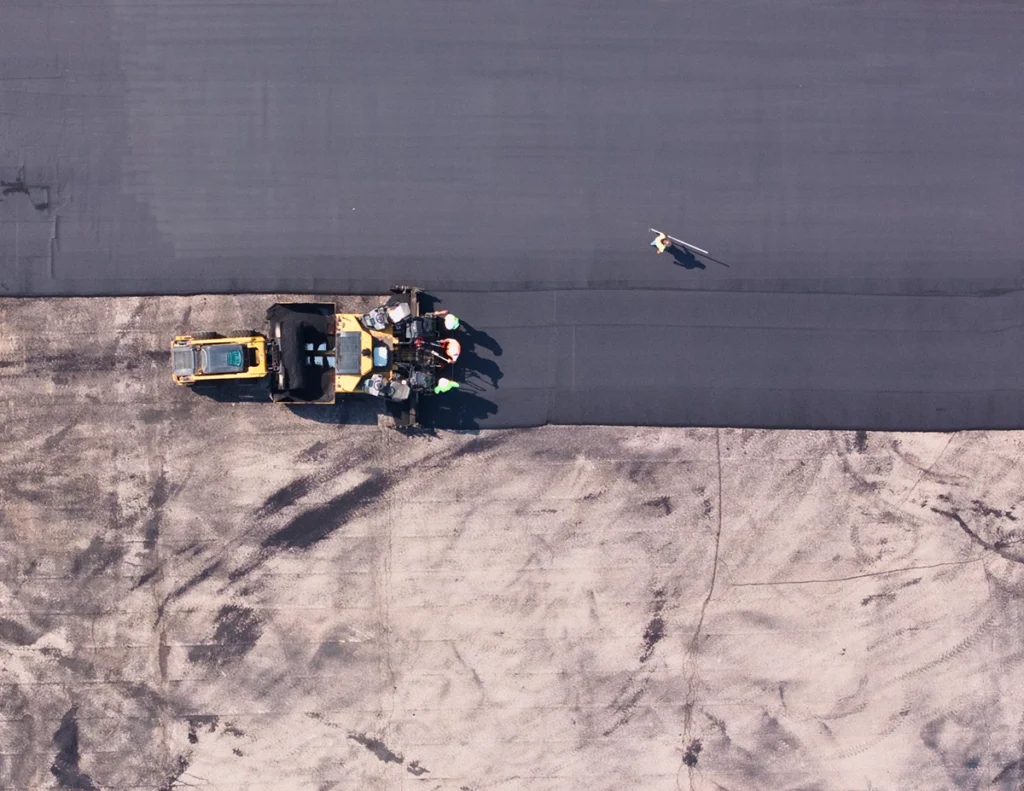
When planning commercial paving projects, property managers, facility directors, owners, and operations teams must account for pavement conditions, drainage, accessibility, traffic flow, budgets, and long-term performance. The larger the property, the more costly planning mistakes can become. A poor assessment can lead to the wrong repair method, unexpected change orders, business disruption, and premature pavement failure.
Pave America manages commercial paving programs for hotels, industrial facilities, municipalities, and multi-site portfolios across the country. In this commercial pavement project planning guide, we explain how to avoid the most common paving pitfalls and get the most out of your investment.
Why Large Commercial Paving Projects Carry Unique Risk
Large commercial paving projects have more moving parts than small, residential paving jobs. Commercial properties often have heavier traffic, larger paved areas, drainage systems, multiple access points, ADA requirements, and employees, customers, tenants, or deliveries who still require access during construction. Problems (and associated costs) can compound quickly. If the pavement assessment misses a failed base, the scope may call for an overlay when reconstruction is actually needed, delaying the project and shortening the finished pavement’s lifespan.
Developing a strong plan addresses the five main risks associated with commercial paving:
- Existing pavement and base conditions
- Project specifications
- Compliance requirements
- Business disruption
- Contractor quality
How to Plan a Commercial Paving Project to Minimize Risk
Effective commercial paving project planning starts before equipment arrives on site. These commercial paving considerations help establish the right scope and reduce surprises during construction.
Site Assessment Before Any Work Begins
A qualified commercial paving contractor should:
- Check the pavement base and subgrade. Weak or failed material below the pavement can affect structural performance and may require repair before installing new asphalt.
- Review drainage. Identify low spots, slopes, catch basins, and areas where water collects. Poor drainage can contribute to pavement deterioration.
- Assess existing pavement. Determine whether the property needs milling and overlay, full-depth reclamation, localized repairs, or reconstruction. Pave America’s asphalt calculator can help you with early material and scope estimates.
- Locate underground utilities. Identify utility lines before excavation or other work that could disturb the ground. The national 811 system connects projects with local utility-marking services.
Writing a Scope of Work That Protects You
Vague commercial paving bids make it harder to compare contractors and can create disputes later. The written scope should identify pavement thickness and materials, required base repairs, drainage work, ADA markings, project limits, traffic-control needs, phasing, compaction or testing requirements, and final striping.
Commercial paving requirements vary by property and location, so the specifications should reflect your site’s conditions rather than a one-size-fits-all design. Clear commercial paving guidelines and detailed estimates make it easier to compare bids on a level playing field.
Phasing and Traffic Management Planning
Phased paving and parking lot maintenance help properties schedule work around operating needs instead of shutting down their entire site at once. Traffic-control planning also supports safer work zones around moving vehicles and paving equipment.
Retail, hospitality, industrial, and other active properties should ask for written phasing plans that address:
- Customer, employee, and tenant access
- Deliveries and loading areas
- Emergency vehicle routes
- Temporary traffic patterns and barricades
- Which sections will close and when
Compliance, ADA, and Site Requirements You Cannot Ignore
Commercial paving projects may include federal accessibility standards, local permits, and stormwater rules. Addressing these requirements during planning prevents delays, rework, and compliance problems.
ADA Parking Lot Compliance Requirements
New or altered commercial parking areas must account for applicable Americans with Disabilities Act (ADA) requirements.
- The number of accessible spaces depends on the total number of parking spaces provided. Generally, you need 1 accessible space for every 25 total spaces
- Accessible parking spaces and access aisles generally cannot have slopes steeper than 1:48, or about 2.08%, in any direction.
- Van-accessible parking can use an 11-foot-wide space with a 5-foot access aisle or an 8-foot-wide space with an 8-foot access aisle.
Local Permits and Inspections
Permit and inspection rules vary by municipality and project scope. They may apply when paving work changes grading, drainage, utilities, site access, or other property conditions. Before work starts, confirm which permits and inspections apply and who is responsible for obtaining them. Define this responsibility clearly in the project scope.
Stormwater and Environmental Compliance
Under federal rules, construction activity that disturbs one acre or more generally requires construction stormwater permit coverage. Smaller sites may also qualify when they are part of a larger common plan of development or sale. Depending on the project, you may also need a Stormwater Pollution Prevention Plan (SWPPP). Establish these responsibilities during planning based on who controls the construction plans or site activities.
Why National Coverage Matters for Multi-Site Properties
Managing different commercial paving companies across multiple properties can make scheduling and quality control harder to standardize. Pave America provides nationwide coverage through a self-performing network rather than subcontracting paving work to outside companies. Our streamlined approach gives multi-site property and facility teams one resource for coordinating consistent pavement programs across different markets.