Minor asphalt damage can quickly become a major expense if not patched correctly.
Infrared asphalt repair offers a fast, seamless way to fix potholes, cracks, and other localized pavement damage without cutting out large sections of asphalt. Compared to traditional patching, it often reduces downtime while creating a durable, permanent repair.
At Pave America, our crews provide commercial asphalt repairs nationwide. We’ve seen firsthand that choosing the right repair method early can extend pavement life and help property owners avoid more expensive reconstruction later.
Here’s how infrared asphalt repair works, its benefits, and when it’s the right solution for your property.
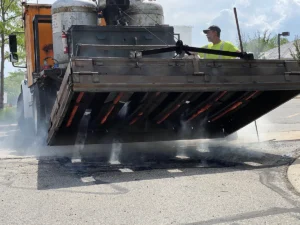
What Is Infrared Asphalt Repair?
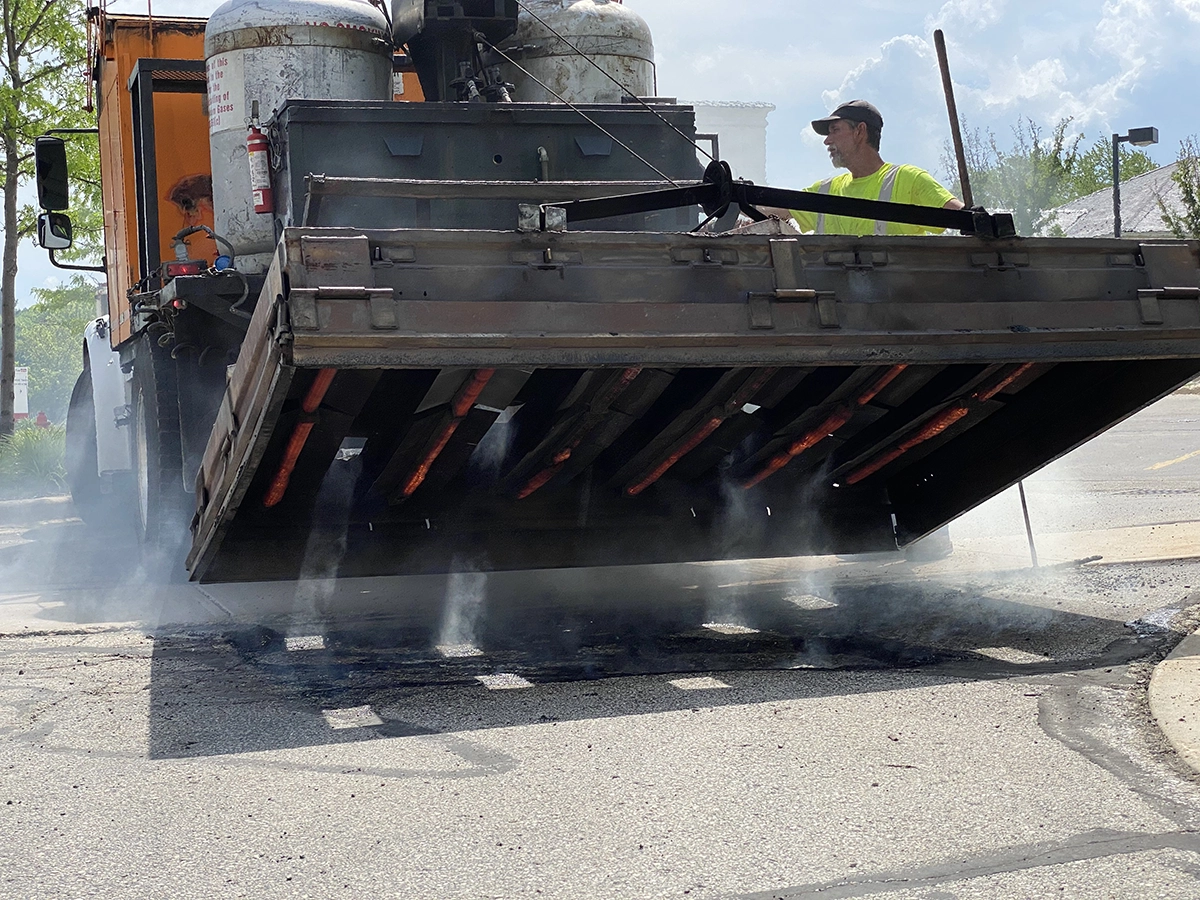
Infrared asphalt repair is an innovative method for fixing cracks, potholes, and other localized pavement damage. It uses infrared heat to soften the existing asphalt. The softened pavement is then blended seamlessly with the surrounding asphalt and mixed with recycled asphalt material to create a strong, durable bond.
Unlike traditional patching methods, infrared asphalt patching reuses much of the existing pavement rather than cutting it out and replacing it. This creates a durable, seamless repair while reducing material waste, making it a cost-effective alternative to traditional repair methods.
How Is It Different from Traditional Patching?
Traditional patching cuts out damaged asphalt and replaces it with new material. This creates seams, or cold joints, where water can enter and eventually cause the repair to fail.
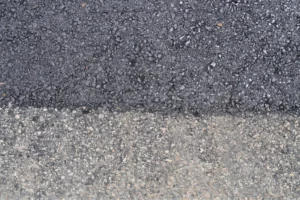
Instead, infrared asphalt patching heats and reuses the existing asphalt. A rejuvenating agent restores flexibility, and new asphalt is added only if needed. The finished repair is seamless, helping reduce water intrusion and future pavement deterioration.
What Equipment Is Used?
Asphalt infrared repair uses a specialized heating unit that warms the material without burning it. Other infrared asphalt repair equipment includes:
- An asphalt rake to blend the material
- A rejuvenating agent to restore flexibility
- Fresh hot-mix asphalt when needed
- A plate compactor or roller to finish the repair
When Should You Use Infrared Asphalt Repair?
Asphalt infrared repair works best when the asphalt surface is damaged, but the underlying base is still sound. It’s also an effective part of a proactive parking lot maintenance plan.
Infrared patching is commonly used for:
- Potholes
- Utility cuts and trench repairs
- Low spots, dips, and divots
- Pavement heaving
- Catch basin elevation adjustments
- Edge cracking and raveling
- Localized surface failures
This method works best for potholes up to 3–4 inches deep. If the damage extends into the base layer, a deeper repair such as full-depth patching or reconstruction is usually recommended.
Infrared repair is also commonly used after utility work. Once underground lines are repaired, crews can use infrared heat to blend the patched area into the surrounding pavement, leaving a smoother, longer-lasting finish.
When Infrared Is NOT the Right Choice
Infrared patching should not be used if:
- The pavement has a base or subgrade failure beneath the surface.
- There is widespread alligator cracking, which usually indicates structural failure.
- The asphalt is too old and brittle to be restored with heat.
- The pavement has been damaged by oil, fuel, or chemicals, which weaken the asphalt binder.
In these situations, a more permanent solution like asphalt milling, full-depth patching, or reconstruction is typically best.
Infrared Patching vs. Other Repair Methods
The right asphalt repair method depends on the type of damage, the condition of the pavement, and whether the underlying base is still stable. If you’re evaluating repair options, here’s how asphalt infrared patching compares to other methods:
| Feature | Infrared Patching | Cold Patch | Saw-Cut-and-Fill |
|---|---|---|---|
| Repair Speed | Fast (often completed in one visit) | Fast (temporary) | Slower |
| Seam Risk | Seamless | Visible joint | Visible joint |
| Material Waste | Low (reuses existing asphalt) | Low | High |
| Best For | Minor surface damage, potholes, utility cuts | Temporary emergency repairs | Deep or structural pavement failures |
| Relative Cost | Cost-effective | Lowest upfront cost | Higher upfront cost |
| Expected Longevity | Permanent surface repair (when the underlying pavement remains structurally sound) | Short-term | Long-term structural repair |
When Saw-Cut-and-Fill Is the Better Option
Traditional saw-cut patching is the better choice when pavement damage extends below the asphalt surface or the surrounding pavement is too deteriorated for infrared repair.
For widespread pavement deterioration, asphalt milling, resurfacing, or full-depth reconstruction may be the most cost-effective approach.
Choose Pave America for all of Your Infrared Asphalt Repair Needs
Infrared asphalt repair provides a fast, cost-effective solution for potholes, utility cuts, and other localized pavement damage. When performed by experienced crews, it creates a seamless repair that minimizes downtime and helps extend the life of your pavement.
If you’re searching for infrared asphalt repair near you, Pave America’s nationwide network provides professional asphalt paving services to commercial properties, municipalities, and facility managers across the country.
If you’re unsure whether infrared patching is the right solution, we’ll evaluate your pavement and recommend the best repair for your needs.
Infrared Asphalt Repair FAQs
What is infrared asphalt repair?
Infrared asphalt repair is a pavement repair method that uses infrared heat to soften existing asphalt. The softened pavement is blended with the surrounding asphalt and, when needed, new asphalt and a rejuvenating agent are added to create a seamless, durable repair.
What types of pavement damage can infrared repair fix?
Infrared asphalt repair is commonly used for potholes, utility cuts, trench repairs, low spots, dips, divots, pavement heaving, edge cracking, raveling, and other localized surface failures. It works best when the underlying pavement base remains structurally sound.
When is infrared asphalt repair not recommended?
Infrared repair is generally not recommended when pavement has a failing base or subgrade, widespread alligator cracking, severely aged or brittle asphalt, or damage caused by oil, fuel, or chemicals. In these situations, full-depth patching, milling, resurfacing, or reconstruction may be a better solution.
How is infrared asphalt repair different from traditional patching?
Traditional patching typically cuts out damaged asphalt and replaces it with new material, creating joints between the repair and surrounding pavement. Infrared repair heats and reuses the existing asphalt, creating a seamless repair that can reduce water intrusion, material waste, and pavement downtime.